
ChatGPT Prompt Engineering for Content Creation: A Copywriter’s Guide
Introduction
Everyone’s using ChatGPT these days, but let’s be honest, most people haven’t the faintest clue what they’re doing. They fire in a one-liner like “Write me a blog about marketing”, press enter, and wait for magic. What they get back usually sounds like a bad French oral exam - a sequence of incoherent sentences that are painful to endure.
The truth is, ChatGPT is only as sharp as the person using it. The difference between bland and brilliant isn’t the technology; it’s how you talk to it. That’s where this idea of “prompt engineering” comes in.
Now, don’t let the name fool you. It’s not about coding or algorithms. For copywriters, it’s really just creative direction under a different name. You tell the AI what you want, give it a bit of structure, some personality, and it starts to behave.
This article is a look at how to do just that. Not by tricking the tool, but by working with it. Think of it as learning how to brief the cleverest intern you’ll ever have.
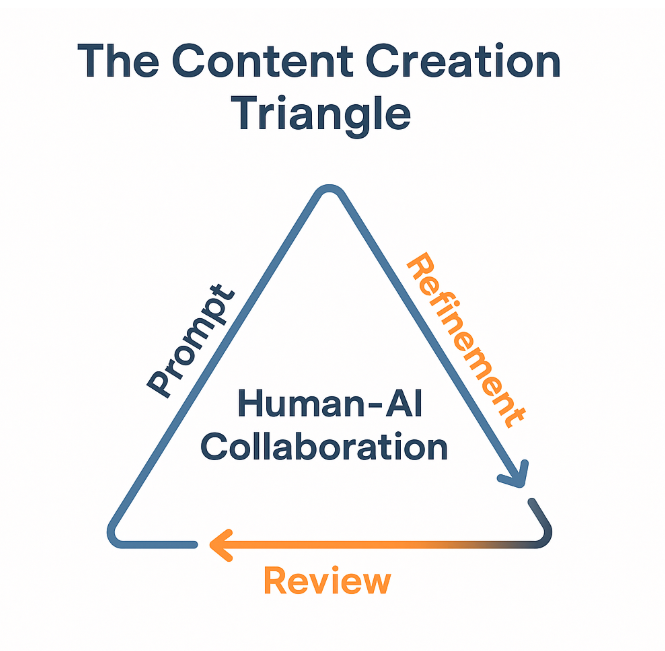
What Prompt Engineering Actually Means
Let’s get one thing straight: prompt engineering isn’t some mysterious coding trick. It’s just good communication — only this time, your audience happens to be an AI. You’re not teaching it quantum physics; you’re guiding it to produce what you actually want.
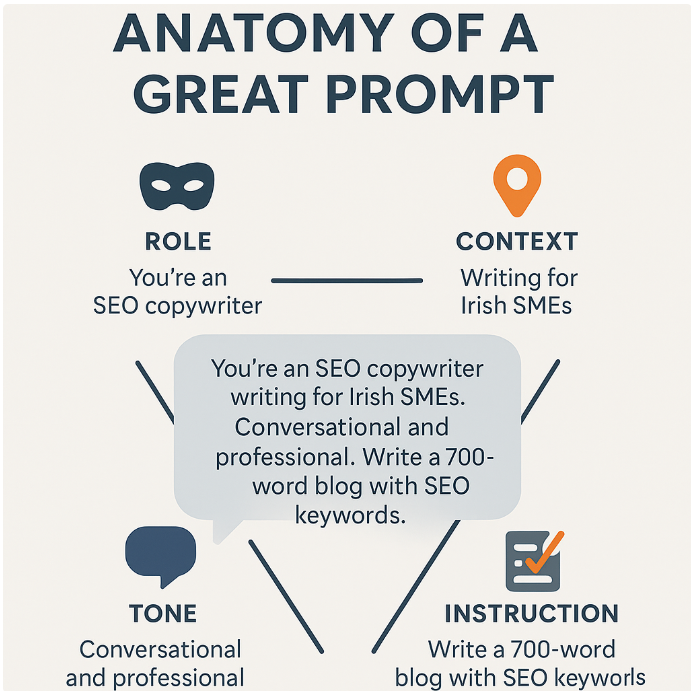
Think of it like briefing a junior copywriter. The clearer your instructions, the better the outcome. That means including details like tone, audience, length, role, and even examples of what not to do. A good prompt is part art, part logic, and a bit of psychology thrown in for good measure.
Take this for example:
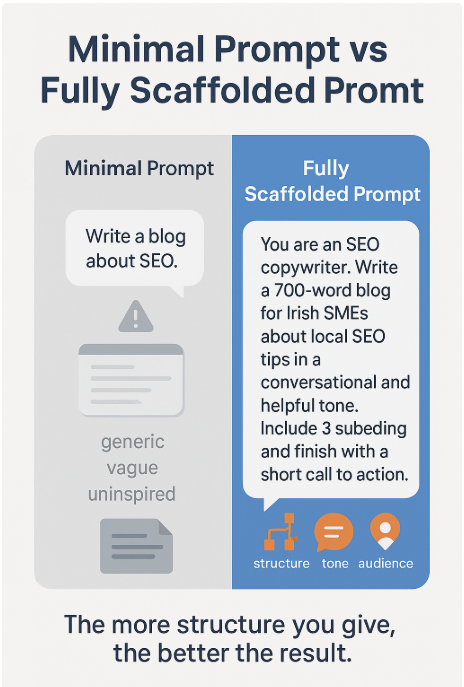
❌ “Write me a blog about marketing.”
✅ “Write a 700-word blog about SEO tips for small Irish businesses in a friendly, conversational tone.”
See the difference? The second prompt gives structure, personality, and direction. ChatGPT suddenly has context, not just chaos.
If you’d like to dive deeper into how AI interprets natural language inputs, Google’s AI research team explains it beautifully here.
The Systematic Approach: Building a Repeatable Process
If you want to get real results from AI content creation, you need more than a flash of inspiration. You need a structure that actually works. The best copywriters do not rely on chance. They use reliable systems that make creativity consistent and repeatable.
Think of it as your own AI assisted writing pipeline. Every project should follow a steady rhythm:
Define the intent. What problem are you solving and who are you writing for? A blog written for tradesmen in Cork will sound very different to one aimed at tech founders in Dublin.
Build your prompt framework. Set out your role such as “Act as a brand copywriter.” Be clear about your goal such as “Create an engaging landing page.” Then choose a tone such as “Friendly and trustworthy.”
Generate and refine. Run your prompt and look at what comes out. The first version is never the final one.
Polish by hand. Add your own rhythm, check the facts, and shape the message until it sounds like you.
Save what works. Keep a record of strong prompts and use them again. Over time you will build a toolkit that gives you reliable results.
Copywriting with ChatGPT works best when you treat it as a craft. Once you have a clear process, you will find that strong writing becomes second nature.
Experimentation: Throw Curveballs and Iterate
If there is one thing I have learned from working with AI, it is that you get out what you put in. ChatGPT is brilliant, but it is also painfully literal. Ask it for a blog about SEO, and that is exactly what you will get - a blog about SEO. Functional, tidy, and utterly forgettable.
The real magic happens when you start playing around. Change the way you ask. Switch the tone. Give it a bit of personality to work with. Try this instead: “Explain SEO like you are an Irish copywriter having a chat with a café owner in Eyre Square.” Suddenly, the language relaxes, the tone warms up, and the content feels like it actually belongs in the real world.
Experimentation is where you find your voice. If one prompt feels flat, try another. Add a twist, throw in an example, or ask it to write from a new perspective. The goal is not perfection. It is discovery. You are teaching the AI how to think with you, not for you.
If you want to learn more about shaping prompts that actually work, this OpenAI resource on prompt design is a solid place to start.
Good copywriting is not about getting it right first time. It is about being curious enough to keep asking the next question.
Scaffolding: Give ChatGPT the Structure It Needs
If there is one golden rule when using ChatGPT, it is this. The more context you give it, the better the result. You cannot just say, “write a blog about SEO,” and expect something worth showing a client. That is not how this works. You need to build a framework around it. Explain the tone you want, who you are writing for, and what good looks like. Give it examples, word counts, and maybe even a few lines that capture the style you are chasing.
Here is the blunt truth. Vague prompts produce vague writing. You get out what you put in. If you want quality, you have to earn it. Spell out what you want and what you do not. If there are phrases that make your skin crawl, say so. If you have a certain flow in mind, describe it. Treat ChatGPT like a junior writer who means well but has no idea what is inside your head.
Show it structure, and it will surprise you. Leave it guessing, and you will get fluff. Try feeding it a sample introduction or a short snippet of your previous work. Offer it direction, not just a topic. Think of it as writing a creative brief rather than giving a command. Structure is everything. Without it, your output will fall flat before it even starts.
Refinement: Why It’s Never One and Done
Here is the truth, a lot of what AI spits out is rubbish. Sometimes it is bland, sometimes it is painfully stiff, and other times it is so far off the mark you wonder if it even read the brief. That is normal. It is a tool, not a miracle worker. The real skill lies in spotting what is useful and fixing what is not.
You cannot just copy and paste what comes back. You have to wrestle with it a bit. Tell it where it has gone wrong, make it try again, push it to sound more like you. And when it finally gives you something half decent, that is when the real writing starts, trimming, shaping, and polishing until it feels right.
Good copy has rhythm, personality, and a bit of fight in it. AI does not know how to capture that on its own. That is your job, to take something half baked and turn it into something people actually want to read. The first draft is just noise. The refinement is where it becomes music.
The Big Misconception: ‘AI Can’t Write Well’
You will often hear people dismiss AI writing outright, claiming it just is not up to scratch. But here is the truth; it is not that AI cannot write, it is that most people cannot prompt. If you feed it lazy, half baked requests, you will get equally lazy results. But when you give it direction, tone, and structure, it can produce genuinely strong drafts.
For the bulk of business writing, whether it is blogs, landing pages or newsletters, AI can do about ninety percent of the heavy lifting. The final ten percent, though, is where the magic happens. That is where you step in, adding rhythm, humour, warmth, and instinct. The things that make a sentence feel like it came from a human who actually gets it.
Take the classic AI opener, “In today’s fast paced world…” and bin it immediately. Replace it with something sharper: “Everyone is chasing clicks, but few remember why people click in the first place.” That is the difference between robotic and real.
AI cannot think for you, but it can help you think faster. If you use it well, it becomes a creative multiplier, not a crutch.
Bringing It All Together
Prompt engineering is not about talking to robots. It is about creative direction - knowing what you want to say and guiding the tool to help you say it better. The copywriters who learn to work with AI, not against it, will be the ones who stay ahead of the curve.
Start small. Build your own prompt playbook. Keep notes on what works and what falls flat. Treat it like learning a new instrument; awkward at first, but eventually the muscle memory will start to build and it will become second nature. The more you experiment, the more you will find your rhythm.
If you are a business trying to make sense of how AI fits into your content workflow, reach out. I help companies use these tools with purpose, not gimmicks, turning AI from a buzzword into a practical advantage that actually drives results.

Colin Smith
Colin is a freelance business copywriter with five years’ experience helping businesses sharpen their digital presence. Through Colin Smith Creative, he blends SEO expertise with a knack for clear, engaging content that puts brand character front and centre.
-
Prompt engineering is the process of crafting clear, detailed instructions for AI tools like ChatGPT so they can produce useful, high quality content. It is less about coding and more about communication - giving the AI enough structure, tone, and context to deliver exactly what you need.
-
Because good prompts lead to great content. Copywriters who understand how to guide AI tools can produce consistent, engaging, and on-brand work faster. It helps bridge creativity with efficiency, allowing you to focus more on storytelling and less on first drafts.
-
Yes, if it is used properly. When supported by smart prompting and careful editing, AI generated content can handle around 90 percent of the heavy lifting. The remaining 10 percent is where human writers shine.
-
Give it structure. Include details like tone, target audience, word count, and examples of what you want (and what you do not). The clearer your input, the better the output. Think of it as briefing a creative partner rather than ordering a finished product.
-
AI can streamline keyword integration, headline generation, and topic research, freeing up time for the strategic and creative elements that humans do best. Used correctly, it becomes a powerful assistant in producing SEO optimised blogs and content that still sound natural and human.
